Grade 6 outing to the University of Pretoria
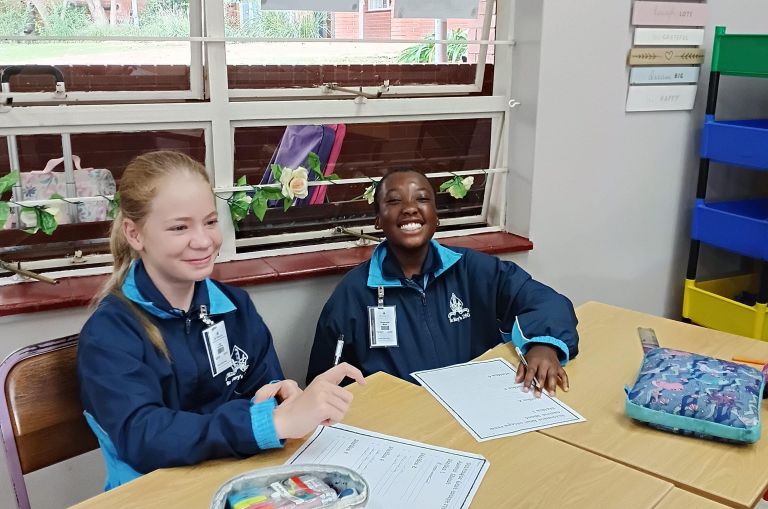
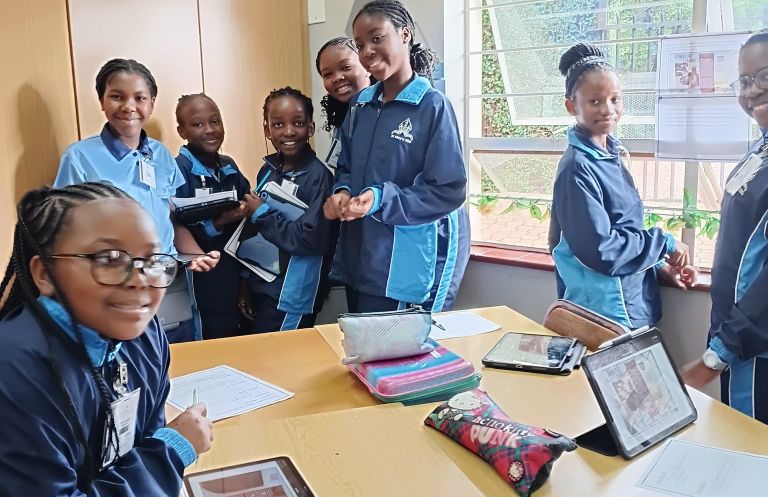
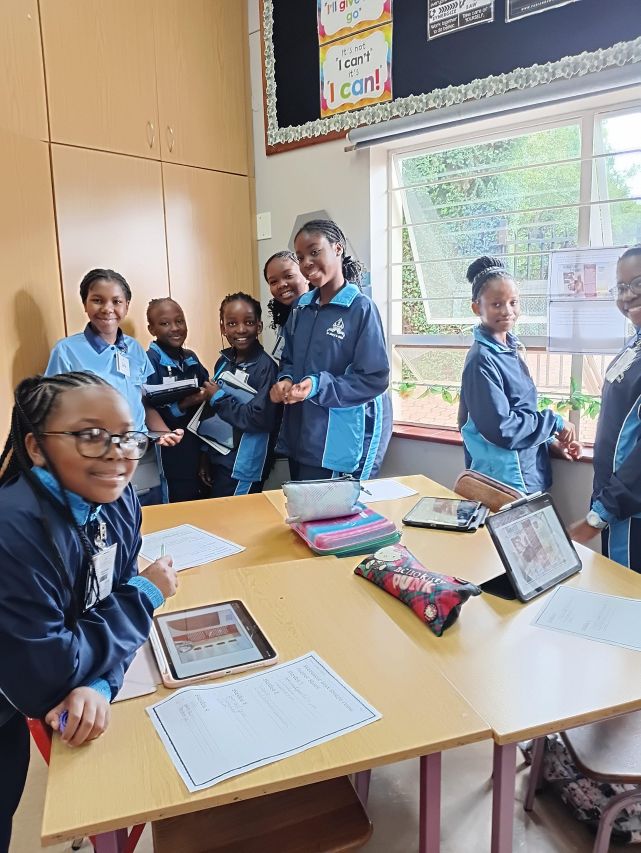
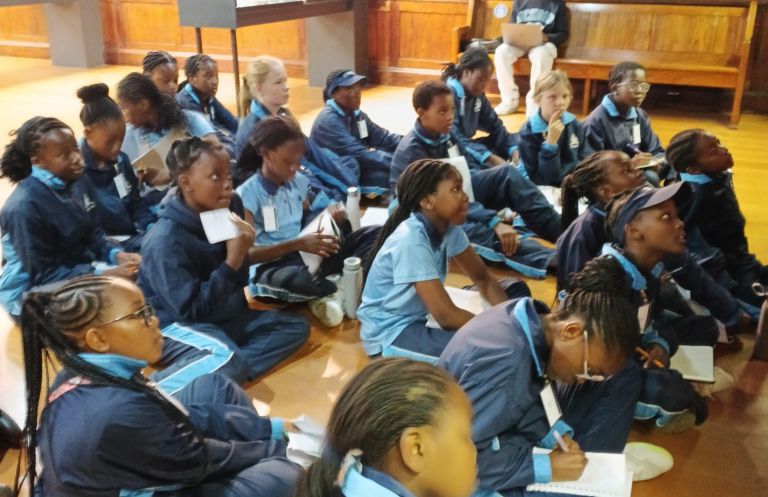
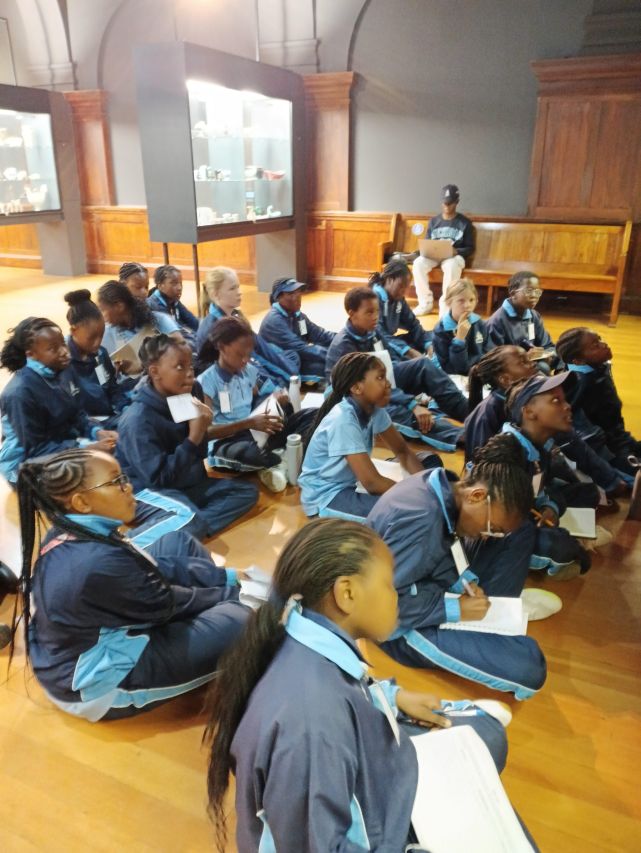
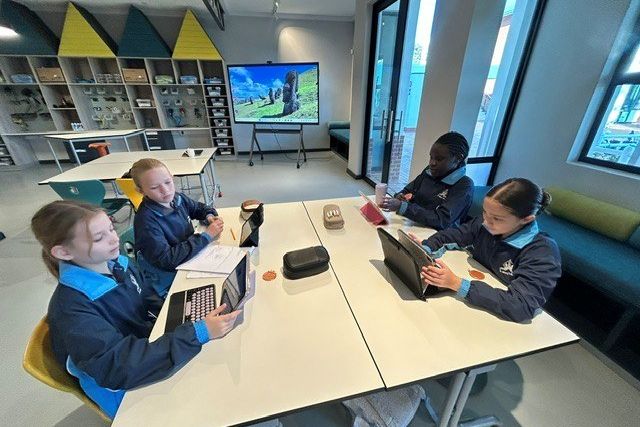
On Friday, 13 March 2026 the Grade 6 girls had the opportunity to experience an interactive day learning more about the Kingdom of Mapungubwe. They spent time on their iPads researching the ceramics and gold that was found at the Mapungubwe archaeological site. They also visited the University of Pretoria to study the wide range of exhibits on display at the Old Arts Building where they were able to see the gold, ceramic artefacts and other material exhibits of the Kingdom of Mapungubwe. When they returned to school they made their own bowls from paper mache that they would decorate during their Art class. It was an enjoyable day for all and the Grade 6 girls wrote a review about what they learnt on the day.
Mapungubwe Ceramic Collection
I enjoyed Mapungubwe because it was very pleasant to learn about how they made their pottery. I learnt that beads were made from gold, clay, glass and ostrich eggshells. The most interesting fact was that K2 spouted pots were mainly found in burial sites. I also learnt that some tools were also found in Zimbabwe. I would recommend a friend in grade 6 to visit the Old Art Collection at the University of Pretoria to find out more about where they got their paint from to paint their pottery, how they lived their daily lives, and what they did.
Three important discoveries at Mapungubwe were the golden rhinoceros, the golden bowl and the golden sceptre. The rhinoceros, golden bowl and the golden sceptre were carved out of wood then a gold foil layer was placed over the sculpture. The golden rhinoceros symbolises leadership because it was aggressive, it stays alone and it was fierce. People believed that the golden bowl was thought to be a crown because it was found by the head of a skeleton. These show that the people of Mapungubwe had a lot of gold.
Stella Bicknell Grade 6
Mapungubwe Review
I thought seeing the Mapungubwe Ceramic Collection at the University of Pretoria was phenomenal and a bit bewildering. I learnt that Mapungubwe was the oldest, largest and one of the most successful civilisations of that time. The most interesting fact I learnt was when I learnt that the people of Mapungubwe used burnishing stones, found on sandstone hills, ridges and small rocky hills, surrounding the Limpopo and Shashe River, to burnish an polish items such as pottery, ivory and bone ceramic. A question I had that was answered by Steven Modena, our guide, was that traditional Mapungubwe ceramics are still often used in today’s, or recent, traditional pottery. I would recommend my friend, Kgopotso, to go visit the Old Arts Collection at the University of Pretoria to find out more about the gleaming gold, the very unusual, but interesting p, sculptures and the diverse artefacts said to have come from China, India and east of Africa.
The people of Mapungubwe became wealthy because they traded with Arabs as part of the Indian Ocean trading system. They traded with ivory, gold, animal skins, wild animals, salt, cattle, fish and wood, the Arabs traded with glistening glass beads, the East traded with cloth, China traded with porcelain bowls and the finest east of Africa and traded in ships called dhows. These ships travelled on the Indian Ocean stopping at certain places before arriving at Mapungubwe. To sum up, Mapungubwe was one of the most successful and wealthy civilisations in the world.
Lesedi Mahlare Grade 6
Mapungubwe Ceramic Collection
I thoroughly enjoyed seeing the Mapungubwe Ceramic Collection because it was inspiring to see the ceramics the artisans of Mapungubwe made. I learnt that clay pots were found in children’s graves. The most interesting part was seeing foreign objects from China: colourful and shiny beads and jewellery. A question I had that was answered was how traders from North Africa were able to trade with the people of Mapungubwe. Steven Motena, our guide, said that they could have went with the traders from Arabia in their dhows because they were close to Asia. I also learnt that some pottery, such as pinch pots, were made by children! They were used for medicine, as toys and in rituals. I would love to visit the Mapungubwe National Park because I would be able to physically see how the Mapungubwe Hill looks like.
Three important discoveries at Mapungubwe were the golden rhinoceros, the golden bowl and the golden sceptre. The golden rhinoceros is a symbol of leadership because it is aggressive, fierce and it stays alone. It shows the role of leader because it is the protector of its family. The sceptre is a symbol of authority. The golden bowl was thought to be a crown, because it was found near the head of a royal skeleton in one of the royal graves. Successful farmers mined gold in two different ways: Alluvial mining and underground mining. Alluvial mining was done by using baskets to scoop small pieces of gold along the riverbanks. Underground mining was done by digging shallow tunnels in the ground, then using fire and water to weaken the rock and get the gold out of the gold-bearing rock! This shows that gold was used to make items of value.
Chiagoziem Amaechina Grade 6