Why mental health matters at every age
Mental health is an essential part of overall well-being. It influences how we think, feel, cope with challenges, build relationships, and navigate everyday life. Just as we care for our physical health through healthy habits, mental health also requires attention and nurturing throughout every stage of life.
From young children learning to understand big emotions, to teenagers navigating identity and belonging, and adults balancing responsibilities and stress, good mental health provides the foundation for resilience, confidence, and meaningful relationships. When our mental well-being is supported, we are better able to manage life's challenges, experience joy, and connect positively with others.
Building mental health in children
Mental health is not simply the absence of difficulties; it is developed through everyday experiences and supportive relationships. Parents, caregivers, teachers, and communities all play an important role in helping children develop emotional well-being. At St Mary’s this month we have focused on Mindful Mondays, special greetings and focused on Mental Health in assemblies as it is Mental Health Awareness month.
Some practical ways to encourage positive mental health in children include:
- Foster strong connections: Children thrive when they feel seen, heard, and valued. Spending quality time together, listening without judgment, and creating opportunities for meaningful conversations help children develop a sense of security and belonging.
- Encourage emotional expression: Help children identify and name their emotions. Let them know that all feelings are valid, even when certain behaviours are not. Teaching children to express their feelings in healthy ways builds emotional intelligence and resilience.
- Practice mindfulness and grounding: Mindfulness helps children become aware of the present moment rather than becoming overwhelmed by worries or strong emotions. Simple activities such as noticing five things they can see, taking slow breaths, listening to sounds around them, or focusing on how their feet feel on the ground can help them feel calmer and more regulated.
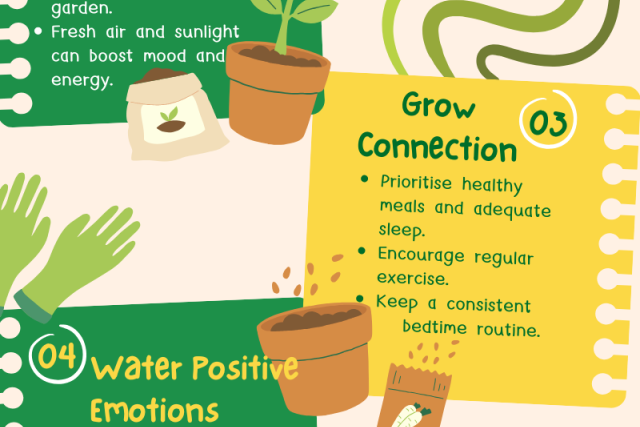
- Promote healthy routines: Regular sleep, balanced nutrition, physical activity, and opportunities for play all contribute significantly to emotional well-being. Predictable routines also create a sense of stability and safety.
- Encourage growth instead of perfection: Children benefit from knowing that mistakes are part of learning. Praising effort, perseverance, and problem-solving helps build confidence and reduces the pressure to be perfect.
Supporting mental health in ourselves
Adults often focus so much on caring for others that they neglect their own well-being. However, caring for our mental health enables us to better support those around us.
Some helpful practices include:
- Stay connected with supportive friends, family, and community groups.
- Make time for mindfulness, meditation, or quiet reflection each day.
- Use grounding techniques during stressful moments, such as focusing on your breathing or noticing what you can see, hear, touch, smell, and taste.
- Set healthy boundaries and allow yourself time for rest and recovery.
- Practice self-compassion, speaking to yourself with the same kindness you would offer a friend.
- Seek support when needed, asking for help is a sign of strength, not weakness.
A lifelong investment
Mental health matters at every age because it shapes the way we experience the world and connect with others. By nurturing supportive relationships, encouraging emotional awareness, practicing mindfulness and grounding, maintaining healthy routines, and showing ourselves and others compassion, we create a strong foundation for lifelong well-being.
Small, consistent acts of care can make a lasting difference, helping both children and adults develop the resilience, confidence, and connection needed to flourish.
We wish you well,